1. Mediaite
  2. Gossip Cop
  3. Geekosystem
  4. Styleite
  5. SportsGrid
  6. The Mary Sue
  7. The Jane Dough
  8. The Braiser

Posts by Philip Bump

I Took My iPad On Safari. Or, Look At These Lions!

Yeah, so I took my iPad to Africa. Contrary to what Gizmodo‘s Joel Johnson considers, don’t go selling your laptop just yet. But you know who liked it? The lions.

I realize just how gratuitous that photo is. But the lions were legitimately interested in the iPad’s multi-touch technology. (Probably. I didn’t really get out of the truck. They seemed interested in it.)

Read on...

Steve Jobs’ Anti-Flash Missive: A Look at Apple’s and Adobe’s Diverging Paths

For all of the tension in Steve Jobs‘ dissertation on his antipathy to Flash, the nut, I believe, is this:

Since that golden era, the companies have grown apart. Apple went through its near death experience, and Adobe was drawn to the corporate market with their Acrobat products.

Each of the two companies has known multiple iterations. Apple has had three: the Jobs (and Wozniak) era (’76 – ’85), the non-Jobs era (’85 – ’97) and the re-Jobs era (’97 – now). Adobe, two: the John Warnock/Chuck Geschke era (’82 – ’00), and the post-Warnock/Geschke era (’00 – now). The “golden era” Jobs refers to above encapsulates a large part of that 1982 – 1985 overlap (and somewhat beyond), with the development of PostScript, the Macintosh, and the Apple LaserWriter. The companies built desktop publishing in concert: Apple, the hardware side, Adobe, the software.

The critique Jobs makes in the quote above is acidic.

Read on...

Facebook Open Graph: Social Metadata For Everything


In 2006, Facebook unveiled a “controversial feature” — sharing changes users made to their profiles with the users’ friends. This was the feature that made Facebook, well … Facebook, the change that created the first truly social network. It’s what made people keep coming back to the site, and what made Facebook the most popular website in America.

In subsequent years, Facebook unveiled other ground-breaking tools. First, Beacon, a system for pushing notifications from advertisers to users’ walls; then, Facebook Connect, which allowed users to use their Facebook identity at other websites. Connect was a success, implemented at sites seeking to facilitate (and improve) interaction with visitors. Beacon was less warmly received.

The primary concern about Beacon was that people found it intrusive. Third-party sites were asking to publish content on users’ walls and Facebook had done a middling job of explaining how the changes worked. And, frankly, it was too soon — for a user base still getting accustomed to the now-expected shared updates, this felt intrusive.

There are two key lessons in this history, leading up to yesterday’s bombshell unveiling of Open Graph. The first is Facebook’s efforts to build a true social web infrastructure, something Slate’s Farhad Manjoo put his finger on last year. The second is their willingness to push people outside of their comfort zones.


Read on...

Flashback From 1998: When Altavista, Lycos, And Blue Mountain Arts Ruled the Web

Media Metrix, December 1998(Before we dig too far into this, you may want to visit the 56k Modem Emulator, to establish the proper sonic mood. Ah, that beloved squeal.)

A colleague (who is handsome and wise) recently discovered an old Media Metrix report delineating “World Wide Web Audience Ratings” for December 1998. It’s a remarkable study, categorizing thousands of sites and conglomerated web companies.

This thing is like finding election results from 1880; like coming across the original Billboard music chart. It looks familiar, like you should know all of the component elements, but it’s unrecognizable. As though they’re all brands made up for movies.

The Rankings
Home and Work, Combined
We’ll start where the report starts – at those sites most popular when combining home and work visits. (Please see above diagram for clarification.) Before I list them, I want you to try and think up what the top fifty websites were in 1998. Got it?

Yeah, you’re wrong:

Read on...

The Hawaiian Tsunami Was Amazing – If Only For The Science

Within minutes of the earthquake just off of Chile’s coast early this morning, the US Geological Survey had it pegged – an 8+ on the Richter scale, ten times as strong as Haiti’s 7.0.

A short time later, the National Oceanic and Atmospheric Administration presented a map of expected energy distribution throughout the Pacific Ocean. In other words, where one could expect tsunamis. Hawaii, it appeared, was well within the danger zone.

The state moved into action, sounding tsunami warning alarms before sunrise, evacuating beaches and low-lying areas, sending boats out of harbors and into the open sea, where surges of high water posed no harm. KHON Fox 2 in Honolulu went on the air, exploring possible ramifications and providing updates.

Then someone put a camera in front of his TV, aimed it at KHON, and put it on Ustream.tv. At its peak, the stream had over 80,000 viewers.

Read on...

The Origins of Chatroulette, as Revealed by Pretty in Pink

Yes, I watched Pretty in Pink last night. I’ll pretend it was because my wife hadn’t seen it, but it’s actually because I still dream of working in a record store with a Smiths poster on the wall.

With Chatroulette tearing up the Net, I was struck by this scene which, frankly, I’d forgotten: (Please forgive the awful camerawork; I’m not the responsible party.)

Read on...

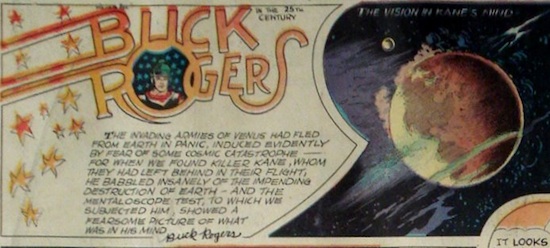
The Glory Days of the Newspaper Comic: A Retrospective

As newspapers continue to meet the fate of the Rochester Times-Union, which was folded into the D&C in 1997, the fate of newspaper comics is uncertain, but guessable. Their entertainment value had already been supplanted before the Internet eviscerated their delivery mechanism. But the Internet may also be the cartoon’s salvation – from Dilbert (likely the first and last major cartoon to jump from the Internet to newsprint) to XKCD to Penny Arcade to Cyanide and Happiness, cartoons are flourishing online.

We come here not to praise the new cartoon, however, but to eulogize its predecessor. We’ve culled (primarily from the copy of The Smithsonian Collection of Newspaper Comics I bought on Alibris a few years back) a selection of classic comics, with commentary about the cartoon, the newspaper and the time period, hoping to give a sense of the world in which these remarkable and often artistic pieces appeared. This is by no means a comprehensive, academic study – just a taste of what was created in the first half of the 20th Century, before you were likely to have been paying attention:

Read on...
Abrams Media Network click here for advertising opportunities

© 2012 Geekosystem, LLC | About Us | Advertise | Newsletter | Jobs | Privacy | User Agreement | Disclaimer | Power Grid FAQ | Contact | Archives | RSS RSS
Dan Abrams, Founder | Power Grid by Sound Strategies | Hosting by Datagram