-
Weird
No Freedom Isn’t Free: Ancient Egyptians Paid Their Way Into Slavery
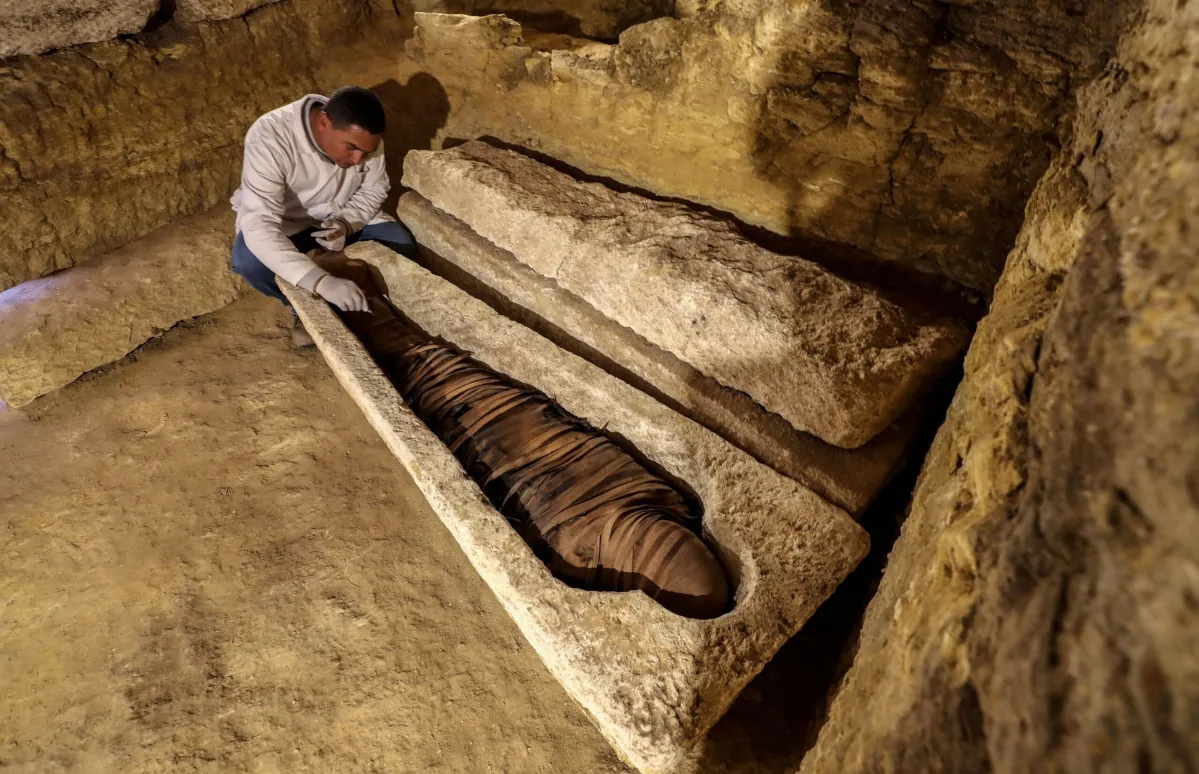
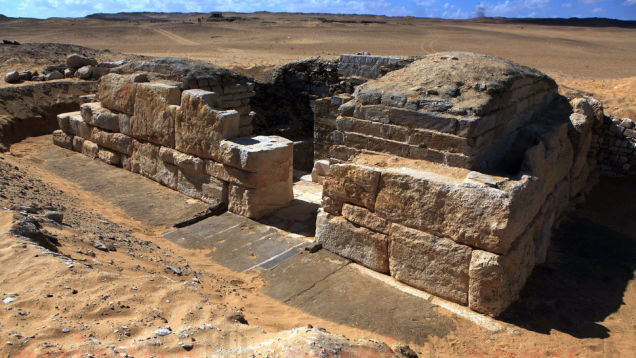
With the sorry state the job market is currently in, having years of knowledgeable experience and a cordial workplace attitude aren't enough to improve one's station in the office. Desperate times call for desperate measures, and sometimes you just have to buck up and rely on the power of the almighty dollar to skyrocket up that corporate ladder. It's a common misconception that the oftentimes unsavory practice of paying one's way to the top is a modern conception reserved only for the truly manipulative, but a recent discovery has shown that ancient Egyptians had done the same a little over 2,000 years ago. While this development isn't all that surprising, the fact that some Egyptians paid their way into slavery is certainly baffling enough to raise an eyebrow.
Read on... -
Uncategorized
2,700 Year Old Egyptian Mummy’s Fake Toe Is World’s First Prosthetic Device, Works Surprisingly Well
Researchers at the University of Manchester have proven that a pair of false toes found in Egyptian archaeological sites weren't just for looks. Modern tests on replicas of the ancient replacement digits show that they really do help people walk, confirming their status as the world's first prosthetic devices and pushing back the timeline on mankind's development of convenient spare body parts -- because hey, sometimes you're gonna lose a toe -- as much as half a century.Read on... -
Uncategorized
Software Uses Supercomputer to Predict Revolutions
A new piece of software, with the aid of a supercomputer for processing, seems to have the ability to predict revolutions with stunning accuracy by analyzing news stories pertaining to the region in question. The software, developed by Kalev Leetaru of University of Illinois’ Institute for Computing in the Humanities, Arts and Social Science, was able to retroactively predict the recent unrest in Egypt. By collecting and analyzing news stories from the U.S. Open Source Center, Britain's BBC Monitoring, Times articles archived all the way back to 1945 and a variety of other sources, the software was able to detect a souring in tone matched only by the bombing of Iraqi troops in Kuwait in 1991 and the invasion of Iraq in 2003. While this spike didn't necessarily predict a revolution, such a strong drop in sentiment devoid from any extreme outside influences certainly suggests it.
Read on... -
Uncategorized
17 Lost Pyramids Found In Satellite Survey of Egypt
University of Alabama at Birmingham Egyptologist Dr. Sarah Parcak and her team analyzed images taken from satellites orbiting 700 km above the earth, using infrared imaging to highlight different materials under the surface, and discovered 17 lost pyramids, over 1,000 tombs and over 3,000 ancient settlements. BBC News reports that initial excavations have already confirmed some of the findings.
How is infrared imaging able to differentiate between the mud bricks ancient Egyptians used to build structures and soil and earth? The mud bricks are more dense than the surrounding soil, and as a commenter on Hacker News points out, the higher density of the bricks means they absorb more light, as well as absorb different regions of light in the spectrum, and is thus detectable due to the light that is reflected back.
Among the initial excavations, the city streets of the ancient city of Tanis were revealed near the modern-day city of San El Hagar. A 3,000-year-old house has since been excavated, and the outline of the structure almost perfectly matches what the satellite imagery had shown, thus validating the method of exploration and quite probably the rest of Parcak's team's findings. The discovered sites are just the tip of the sandberg, as Parcak theorizes many more sites are buried even deeper, covered by the silt of the River Nile. The satellite method, if put into common use, would allow teams to find better starting points when faced with a large site, and in theory, would make the exploration and excavation processes move more quickly than they have in the past.
(BBC News via Hacker News)
Read on... -
Uncategorized
Could OpenMesh Prevent Government-Imposed Internet Blackouts?
In the past two months, the world has on multiple occasions seen governments preventing their populaces from accessing the Internet during times of existential political crisis. It's not hard to characterize the Egyptian and Libyan use of an Internet blackout as a direct attack against the groups that sought and still to topple their political leaders, as the protestors in those countries relied on web-based platforms to organize their protests and inform the world of their plight. But Shervin Pishevar hopes to end any further restriction of Internet traffic with his OpenMesh project. On its website, OpenMesh says that the will "find the best of breed Open Source Technologies and to build partnerships with existing technologies that would allow us to create a private citizen owned communications infrastructure." In short, OpenMesh aims to give individuals the tools to remain connected with each other and the world at large without relying on the existing communications infrastructure, that, as demonstrated in the recent unrest in the middle-east, are quite vulnerable. OpenMesh would create an independent, ad-hoc, user-based network that would be far more robust and out of the hands of anyone -- government or otherwise -- that would seek to restrict communications.
Read on... -
Uncategorized
Egyptian Names His Firstborn Daughter “Facebook”
Critics like Malcolm Gladwell have expressed their doubts as to the importance of social media in Egypt's more or less peaceful revolution, but the Egyptian man who recently named his daughter in honor of Facebook probably thinks otherwise. Egyptian newspaper Al-Ahram (warning: PDF) reports: (h/t TechCrunch for the translation)
A New Day Man Names His Newborn Girl Facebook A young man in his twenties wanted to express his gratitude about the victories the youth of 25th of January have achieved and chose to express it in the form of naming his firstborn girl “Facebook” Jamal Ibrahim (his name.) The girl’s family, friends, and neighbors in the Ibrahimya region gathered around the new born to express their continuing support for the revolution that started on Facebook. “Facebook” received many gifts from the youth who were overjoyed by her arrival and the new name. A name [Facebook] that shocked the entire world.
On the one hand, this illustrates pretty compactly the importance that Facebook and social media had to at least one subset of the Egyptian protesters. On the other: She's going to be stuck with that name for the rest of her life, man. As one NYMag commenter puts it, "the first kid named 'Wikileaks' will be a psychic wreck before entering school. parents shouldnt deliver bad jokes about their children on a platter." See also: Mark Zuckerberg appears on Tunisian protest banner. (TechCrunch via NYMag)Read on... -
Tech
Internet Switched Off, Restored In Libya
As the wave of anti-government sentiment continues to spread across the Middle East, protests in Libya took a strange turn last night when the L.A. Times reported that the Internet was down across the country. Dozens have been killed in Libya since the protests began, and the loss of communications stoked fears of a deadly crackdown. But within just six hours, Internet communication was restored. It is unclear whether this suspension of online access was simply a test of the country's ability to do so, or if Libyan leaders bowed to international pressure to restore communications. However, social networking sites such as Twitter and Facebook are still suspended. This mysterious suspension and restoration of communication comes quick on the heels of similar actions during the recent uprising in Egypt, which toppled the reigning government. The events in Libya may indicate a move against suspending total Internet access during a time of unrest, as such actions did little to hamper Egyptian protests. In fact, the Egyptian government's communications crackdown drew further international attention and condemnation. Though the intent behind the shut down can only be guessed at, it underlines the Internet's growing role in the political life of countries. Moreover, the difficulty nations face when they try to impose control over internet communications. This is a brave new world, and hopefully we've seen the last of Internet killswitches. (Image and story Via The Next Web)Read on... -
Uncategorized
Livestream of Mubarak’s Address to Egypt
Will he resign today or won't he? We've heard conflicting reports today, but Egyptian President Hosni Mubarak is addressing the nation, and Al Jazeera is broadcasting live from Tahrir Square. #reasonsmubarakislate is a trending topic on Twitter, but Al Jazeera reports that Egyptian president Hosni Mubarak will be addressing the nation "imminently." YouTube is livestreaming the coverage. Update: Looks like Mubarak isn't going anywhere. At that, he will be delegating some of his powers to his vice president, but the crowd is not too happy.
Read on... -
Uncategorized
Egypt Protests Now Conducted by Internet Memes
Spotted in Egypt: A protester calls for Mubarak's resignation by invoking Y U NO Guy. Reddit: "What happens when kids can't post f7u12 cartoons on the internet: they take to the streets." (via TDW)
Read on... -
Uncategorized
“KennethColePR” Spoof Account Mocks Cole’s Egypt Twitter Gaffe
Earlier today, pun-obsessed clothing person Kenneth Cole -- not just his brand, but Kenneth Cole himself -- attempted to cash in on the protests in Egypt by plugging his new spring collection. Quote, "Millions are in uproar in #Cairo. Rumor is they heard our new spring collection is now available online at http://bit.ly/KCairo -KC." (Yes, that is a Cairo-'branded' custom URL.) Naturally, a lot of people on the Internet thought this was just a wee bit insensitive toward the protesters who have been injured and killed by state police and government loyalists. This being the Internet, someone sprung into action and made a fake @KennethColePR Twitter account, the recurring theme of which is exploiting misfortune and tragedy to hawk Kenneth Cole clothes:Read on... -
Uncategorized
Egypt Forced Vodafone to Send Pro-Government Text Messages During Protests
If there was any doubt that the Egyptian government treated private tech companies alarmingly during the recent protests, mobile company Vodafone says that it was forced to send waves of government-scripted propaganda text messages, the source of which was unclear to mobile customers who received them. Vodafone says that carriers Mobinil and Etisalat were also forced to send similar messages. According to Vodafone's statement, "Vodafone Group has protested to the authorities that the current situation regarding these messages is unacceptable ... We have made clear that all messages should be transparent and clearly attributable to the originator." A few of the messages Vodafone was forced to send:
Read on... -
Uncategorized
Egypt Gets Its Internet Back
Good news: According to reports and analyses, the Internet has returned in Egypt after a blackout of several days. Web intelligence firm Renesys, which offered one of the first data-supported reports confirming the Internet shutdown on January 28th, offers the above chart, with the note that "The rebooted Egyptian table is smaller than it was a week ago, but that's mostly because of a normal process called "reaggregation" ... That's to be expected: the Egyptian table had gotten pretty dense with redundancy in the week leading up to the takedown, and it's been cleaned up in the process of being brought back." Twitter and Facebook have apparently been unblocked as well. The resumption of Internet service coincides with Egyptian president Hosni Mubarak's announcement that he will not seek another term in office. While the Army has asked protesters "to go home to help provide security and restore stability ... We ask you to go home not because we are a superior power. We ask you kindly," thousands of people reportedly remain in Cairo's Tahrir Square, demanding Mubarak's prompt resignation. (via WSJ, ComputerWorld. Title chart via Renesys)Read on... -
Uncategorized
Mubarak Will Not Run for Another Term
Chalk one up for the Internet: Egyptian president Hosni Mubarak has announced that he will not run for another term in office and will speed up elections, which are scheduled for September.
"I never intended to run for reelection," Mubarak said in his televised address, which aired at 11pm local time on Tuesday. "I will use the remaining months of my term in office to fill the peoples' demands," he said, and allow the transfer of power. He said the main priority was the stability of the nation and that he would seek changes to the constitution. Mubarak seemed largely unfazed by the protests, saying that "the young people" have the right to peaceful demonstrations, but quickly added that protesters had been "taken advantage of" by people trying to "undermine the government."
(Al Jazeera via Boing Boing)Read on... -
Uncategorized
Google Gives Voice to Disconnected Egyptians
Google, Twitter, and SayNow have taken it upon themselves to give a voice to the masses in Egypt, who have been completely cut off from the Internet. Over the weekend, the team created "Speak2Tweet", a service that allows anyone to tweet a recorded message via telephone. Though the latest reports claim that cell networks will be shutdown in anticipation of tomorrow's "march of millions", landline phones can still be used. While most of the recordings are in Arabic, a few particularly heartwarming messages can be found in English on the speak2tweet Twitter account.
We worked with a small team of engineers from Twitter, Google and SayNow, a company we acquired last week, to make this idea a reality. It’s already live and anyone can tweet by simply leaving a voicemail on one of these international phone numbers (+16504194196 or +390662207294 or +97316199855) and the service will instantly tweet the message using the hashtag #egypt. No Internet connection is required. People can listen to the messages by dialing the same phone numbers or going to twitter.com/speak2tweet. We hope that this will go some way to helping people in Egypt stay connected at this very difficult time. Our thoughts are with everyone there.
(via Google) (title pic via Al Jazeera)Read on... -
Uncategorized
Al-Jazeera Sees 2500% Increase in Web Traffic Due to Egypt Coverage
As the world has stood transfixed by the unfolding situation in Egypt and many have turned to the web for timely information, international news network Al-Jazeera has exploded in its online presence, seeing a reported 2500% increase in web traffic, 60% of which is coming from the United States.
Read on...