-
Uncategorized
iPhone App Instantly Identifies Super PACs Behind Political Ads
It's that time of year again. The time when the airwaves are so saturated with political advertisements that you find yourself wishing democracy would go away and leave us clawing one another's eyes out for the world's last remaining loaf of bread in peace. This year promises to be even worse, with money flooding into political action committees and newly unleashed Super PACs swollen with cash money to buy up the commercial space that should be reminding us about fast food items we might like to purchase. With a new mobile app, Super PAC App, you can at least find out who is responsible for the onslaught of presidential campaign ads you're about to be subjected to -- especially if you're one of the poor lost souls in a swing state whose vote might actually count.Read on... -
Uncategorized
New Chemical Compound Database Knows All the Reactions
After 10 years of work, Northwestern University researchers have assembled a database of all known organic chemical compounds and the ways that they react together. By gathering data from researchers around the world, the Northwestern team was able to cram the collective wisdom of several centuries worth of chemists into a tool they compare to Google, but for looking at chemical reactions instead of wondering "what other show was that guy in, he looks so familiar?" The database, known as Chematica , should speed up development and testing of chemical compounds for things like food additives and pharmaceuticals.Read on... -
Uncategorized
Newly Discovered CYCLOPS Gene Points To Vulnerability in Cancer Cells
A long-theorized but only recently discovered class of genes may point to an inherent weakness in tumor cells. Even better news? The soft spot in cancer's defenses is present in cells from a wide variety of cancers, meaning that treatments derived from it could be a tool in fighting cancers across the board, not just targeting one or two types. Researchers from MIT, Harvard and the Dana-Farber Cancer Institute report on these so-called CYCLOPS genes (the acronym officially stands for Copy number alterations Yielding Cancer Liabilities Owing to Partial losS, but we suspect the name stuck mostly because it just sounds cool) this week in the journal Cell.Read on... -
Uncategorized
Graphene Reacts Based on Material Beneath It, Continues to Amaze
Most compositions react to different chemicals due to the nature of their atomic structure and other similar factors. This, apparently, is one of those things that doesn't necessarily apply to graphene. When layered on top of various materials, a one-atom-thick sheet of the stuff can exhibit drastically different properties. This includes both how the graphene reacts chemically with other materials introduced to the sheet and how it conducts electricity.
Read on... -
Uncategorized
Fact or Fiction: MIT Grad Student Saved Apollo 13
In an "ask me anything" thread on Reddit, a 97 year old man who allegedly worked on Apollo 1 through Apollo 14 made a claim that Apollo 13's brilliant "slingshot maneuver" idea was not the work of NASA, but that of a grad student at MIT. NASA then covered the whole thing up when they found out that the student in question was "a real hippy type." If this story is true, it completely rewrites one of the most heroic rescue efforts in United States aerospace history; many redditors, however, are calling "BS." Make the jump for the full scoop as well as our take on the matter.
Read on... -
Uncategorized
Taking Airborne Won’t Help You: The Top Airports for Spreading Disease
You might want to give that trip to Maui a little more thought. Don't start packing until you take a look at a list of U.S. airports ordered by their likeliness to spread infectious disease. Researchers at MIT have taken a variety of factors into account for determining which airports are most likely to be the hubs of global disease spread. Laguardia or JFK may be a more serious decision than you thought.
Read on... -
Uncategorized
Graphene Can Improve Desalination Efficiency by Several Orders of Magnitude, Can Do Pretty Much Anything
Graphene. It can be stronger than steel and thinner than paper. It can generate electricity when struck by light. It can be used in thin, flexible supercapacitors that are up to 20 times more powerful than the ones we use right now and can be made in a DVD burner. It's already got an impressive track record, but does it have any more tricks up its sleeve? Apparently, yes. According to researchers at MIT, graphene could also increase the efficicency of desalination by two or three orders of magnitude. Seriously, what can't this stuff do?
Read on... -
Uncategorized
New Fuel Cell Implant Is Powered By Your Bodily Fluids
Neuroengineers at MIT have developed a new kind of fuel cell that is small enough to be implanted in the human body and can generate electricity from the glucose already present in your cerebrospinal fluid. The power from these cells would allow you to generate enough electricity to power sensors that can decode your brain activity and interface with cool peripheral gadgets and prothetic limbs. A cyberpunk future is surely close at hand.
Read on... -
Uncategorized
MIT Develops Jet-Injection Device to Replace Needles
Not many folks I know enjoy having to receive an injection. Mostly this has to do with the fact that they don't like needles. Needles can leave bruises, aren't the most accurate of tools and involve piercing our protective layer of skin to even work. But that all might change soon with Massachusetts Institute of Technology's development of an incredibly accurate jet-injection device. Welcome to the future.
Read on... -
Uncategorized
MIT Algorithm Can Tell Why You’re Smiling
When you think of smiling, you usually equate it with happiness. While that's often the case, it isn't always; people have been known to smile for other reasons as well. Perhaps the second most common reason to smile is to fake happiness, with smiling out of frustration coming in third. As a person, you're usually able to suss out the meaning behind a smile by looking at it in context of the moment in which it happened, but given a single image, your accuracy goes way down. New smile-tech from MIT, however, excels at figuring out the story behind the snapshots.
Read on... -
Uncategorized
MIT Makes Anti-Fogging, Glare-Free, Self-Cleaning Glass
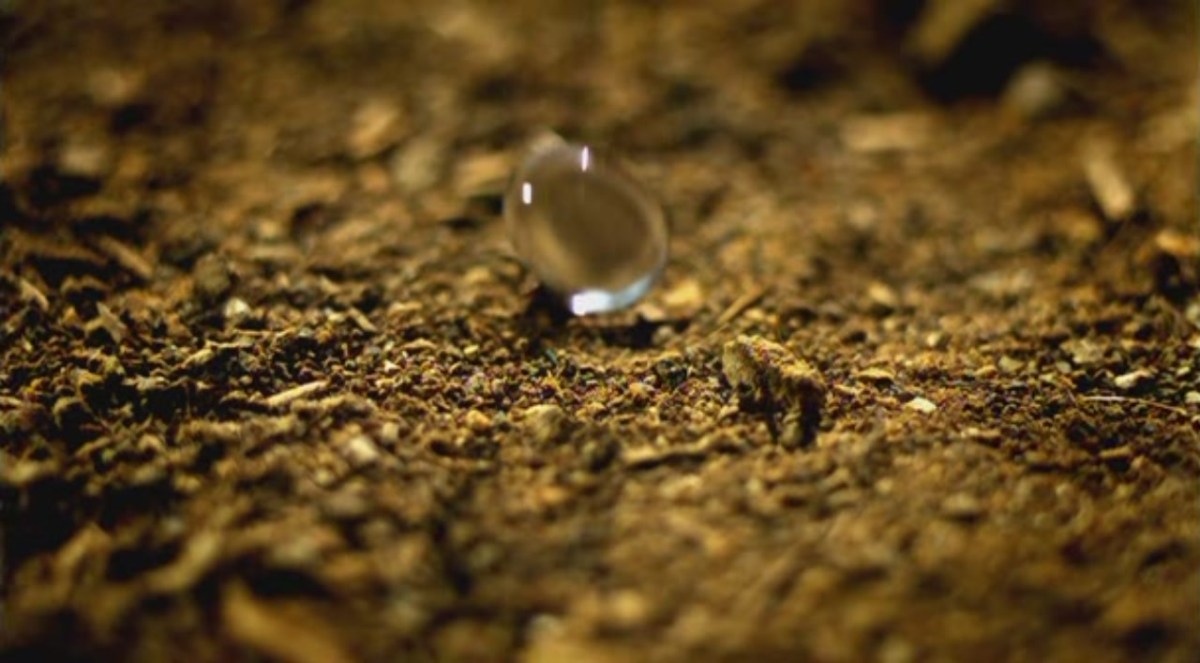
Researchers at MIT have developed a new surface texture that, when applied to glass, produces a kind of glass that removes reflections, is free of glare, doesn't fog, and has a surface that causes water droplets to bounce off like rubber balls, as pictured to the left and featured in a video below.
Read on... -
Uncategorized
MIT Students Play Tetris on a Building
Over the weekend, a group of MIT students performed a feat that isn't exactly unique, but generally impressive when coherently completed: They turned the outside of a building into a large game of Tetris. The students performed the feat on MIT's Green Building, which is home to the MIT Earth and Planetary Sciences department. Players could move, rotate, and drop blocks, but there was a twist as the player progressed through the levels.
Read on... -
Uncategorized
MIT Researchers Discover Memories are Stored in Specific Brain Cells
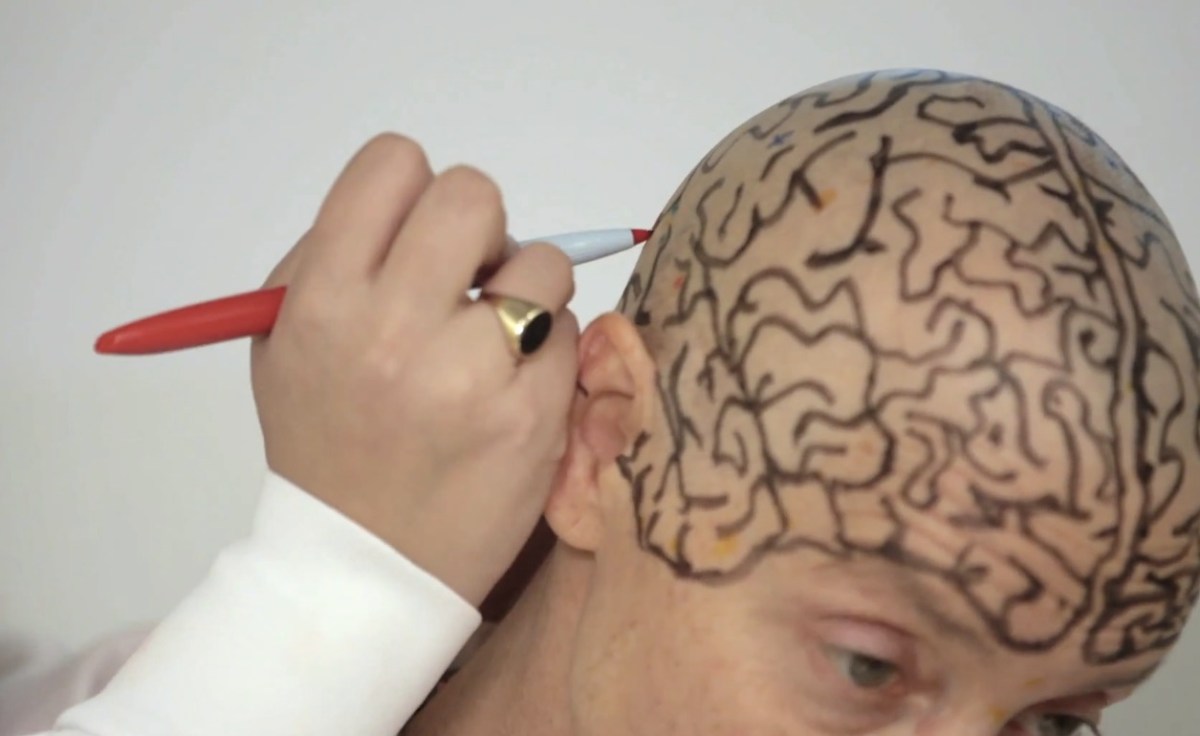
The means by which traces of memory are stored, engrams, have only been hypothetical, which means we did not have an idea of the actual, concrete means by which memories are stored in the brain. However, in a new study, MIT researchers used optogenics -- a combination of optical and genetic methods to control events in cells of living tissue, essentially the manipulation of cells so they're sensitive and responsive to light -- to show that memories are actually kept inside brain cells.
Read on... -
Uncategorized
MIT Researchers Aim to Teach Aircraft Carrier Drones to Read Hand Gestures
Right now, efforts are underway to bring the airborne military drones that have been so widely used in overland conflicts onto aircraft carriers. There's a number of enormous challenges to be met first, not the least of which is how these robotic fliers will interact with humans on the decks. Looking to solve that problem, and improve natural human-machine communication while he's at it, is Yale Song, a Ph.D. student at the Massachusetts Institute of Technology who has begun teaching a computer to obey the hand signals used by aircraft carrier crews to communicate with pilots.Read on... -
Uncategorized
MIT Develops Metamaterial That Slows Down The Speed of Light
There's always a lot of fuss about getting other things to go as fast or faster than the speed of light. But what about changing the speed of light? Is there anything useful we could do by slowing light down rather than speeding things up? As it turns out, there are all kinds of benefits to be had from slowing light down and making it easier to capture, which is why MIT has been working on nanotech "metamaterials" that can do just that: Slow down the speed of light.
Read on...