

comScore

sleep

  1. Science

    Computers Can Read Your Dreams, Can’t Explain Your Clown Nightmares Just Yet

    Machines may be replacing us slowly, one human at a time, but at least we've still got our dignity, right? We've still got our dreams. Well, maybe not! Sure, computers can't take away your waking aspirations but now they are beginning to detect the dreams we have while sleeping. Worse, humans -- neuroscientists, of course -- are teaching them to do it! Even dreamland isn't safe anymore, but wait, maybe some good can still come from this.

    Read on...
  2. Science

    Snooze Alarm: Friend or Foe? Watch This to Find Out

    Your alarm goes off. You reassess what time you really need to get out of bed that you decided the night before, and sleepily paw at your alarm clock until you find the snooze button. It only buys you a few more minutes, but boy howdy, are those some sweet, sweet minutes. The problem is that you usually feel worse after hitting snooze than when you first woke up. So is the snooze alarm really doing you any favors? It is not, and AsapSCIENCE explains why you should just wake up without hitting snooze.

    Read on...
  3. Space

    520 Days of Simulated Spaceflight Really Messes With Your Sleep Patterns

    There's been a lot of discussion about the obstacles that would have to be overcome before NASA could send humans to Mars. Food, fuel, radiation, and more have all been considered, but here's a new one to take into account: Sleep. A study done on six mock astronauts in a 520 day simulated mission to Mars showed signs of severely disrupted sleep patterns, and in space that could lead to muscle atrophy and bone loss.

    Read on...
  4. Uncategorized

    Being an Insomniac Could be Bad for Your Bones

    A team of scientists led by Carol Everson at the Medical College of Wisconsin have found that rats regularly deprived of sleep suffer from both bone and bone marrow issues directly related to said lack of sleep. Has science found that staying up all night watching Netflix is bad for your skeleton?

    Read on...
  5. Uncategorized

    Science Proves Sleep Learning Possible; “Learn French While You Sleep” CDs Still Useless

    Good news for the productivity-minded individual -- the eight hours a day you spend dead to the world in the comforting embrace of sleep is time you could be getting work done. Hooray? Well, maybe. While reading or learning another language while you catch some shut-eye is still the stuff of fantasy, new research from the Weizmann Institute suggests that learning in one's sleep may be a possibility, and that previous attempts just haven't used the right combination of senses to make our subconscious minds start paying attention. Researchers have now used sounds and smell to get sleeping brains to expect a combination of the two sensations without any input from the conscious mind, according to a study published in the journal Nature Neuroscience.

    Read on...
  6. Uncategorized

    Study: Sleep Disorder Tied to Left-Handedness

    Though restful and entirely necessary for survival, sleep is an incredibly weird process. Stranger still are sleep disorders, like Periodic Limb Movement Disorder or PLMD. Those afflicted with this disorder frequently move or jerk their limbs while sleeping, leading to insomnia and tiredness. Scientists are still trying to learn why PLMD occurs, but a new study recently published in the journal Chest has linked the disorder to left-handedness. The study, carried out by Mohd Kanjwal and Dawn-Alita Hernandez, took a pool of 100 patients and grouped them by handedness. Of these, 84 were right handed and 16 left-handed. When looking at the instances of PLMD among their group, the researchers found that 69% of the right-handers suffered from PLMD while 94% of the left-handed patients showed signs of the disorder.

    Read on...
  7. Uncategorized

    Study: Interrupted Sleep Harms Memory Development

    New research from a group at Stanford University has found that broken or interrupted sleep has a negative effect on the ability to build memories in mice. The research, published in the Proceedings of the National Academy of Science, shows that disrupting the sleep of mice made it harder for them to recognize and identify objects that should have been familiar to them. To study the mice, the researchers interrupted their sleep but made sure that the amount of time sleeping was no shorter than normal. Using optogenetics, a technique where certain cells are genetically engineered to be controlled by light, the researchers targeted cells in the brain. The cells on which the researchers focused plays a critical role in switching the brain between the sleep and awake states. Light pulses were sent into the brains of the mice while they slept, to disrupt their sleep but not change their total sleep time or the quality or intensity of their sleep. The researchers then tested the mice memory by putting them in front of two objects, one new and one familiar. Mice whose sleep had been disrupted did not recognize either object, while mice who had slept undisturbed focused all their attention on the new object.

    Read on...
  8. Uncategorized

    A Cool Brain Offers New Relief To Insomniacs

    Forget counting sheep. For many people, sleep doesn't come easily, and no combination of comfy bed, soothing sounds, warm milk, or even prescription medication will do the trick. But, people suffering from insomnia may have another option when it comes to sleep aids. According to new research, wearing a cap that cools the brain reduces the amount of time it takes insomniacs to fall asleep. The research was presented at the Sleep 2011 conference, the annual meeting of the Associated Profession of Sleep Studies. The cooling process, called frontal cerebral thermal transfer, was developed by Dr. Eric Nofzinger and Dr. Daniel Buysse from the Sleep Neuroimaging Research Program at the University of Pittsburgh School of Medicine. Cooling the brain is an effective way to help people with sleep difficulties because it slows metabolism in the frontal cortex, and insomnia is linked to increased metabolism in that area of the brain.

    Read on...
  9. Uncategorized

    Study: Bright Screens Ruin Your Sleep

    If you're having trouble sleeping, it may be time to close the laptop and turn off the TV. That's the conclusion from a new study released by the National Sleep Foundation, which looked at the corolation between sleep and electronic devices. It seems the brightly lit displays so common on phones, computers, and televisions may be ruining our chances of a good night's sleep

    Read on...
  10. Uncategorized

    24-Hour Cycle All That Stands Between Humanity and Fat, Fearless Apocalypse

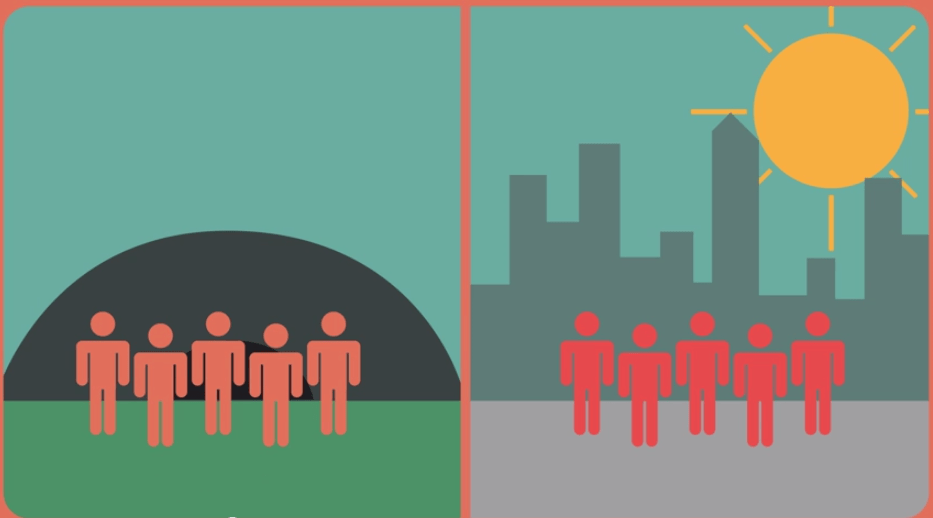
    A recent study published in the Proceedings of the National Academy of Sciences aimed to look at the physical effects of breaking the circadian rhythm -- the cycle of light and darkness that synchronizes the "internal clock" of creatures. For those living on planet Earth, our bodies (and those of plants and other animals) use the 24-hour day to regulate body functions. But our modern lives have prevented this rhythm from running our lives. From the report:

    Over the past 100 y, especially with the advent of electric lighting, modern society has resulted in a round-the-clock lifestyle, in which natural connections between rest/activity cycles and environmental light/dark cycles have been degraded or even broken. Instances in which rapid changes to sleep patterns are necessary, such as transmeridian air travel, demonstrate negative effects of acute circadian disruption on physiology and behavior. However, the ramifications of chronic disruption of the circadian clock for mental and physical health are not yet fully understood.
    For this experiment, scientists put several mice on a 20-hour day schedule, with 10 hours of light and 10 of darkness and observed the results.

    Read on...