

comScore
Uncategorized Sunday, August 1st 2010 at 3:00 pm

The Triceratops May Not Be A Real Dinosaur [Update]

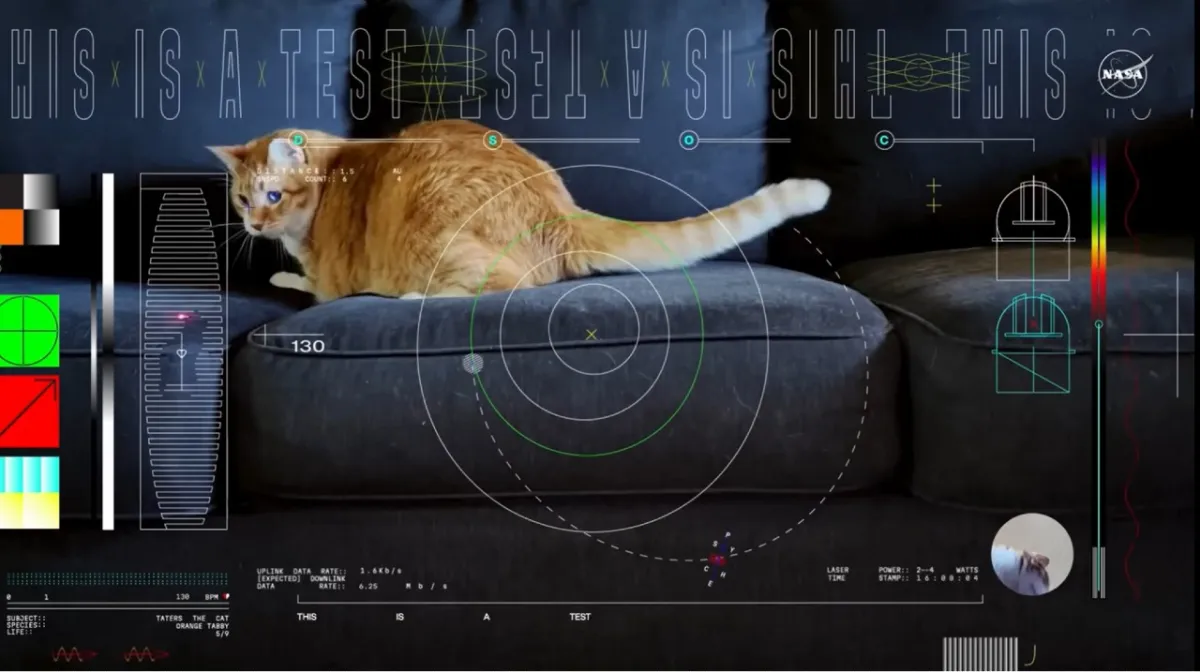
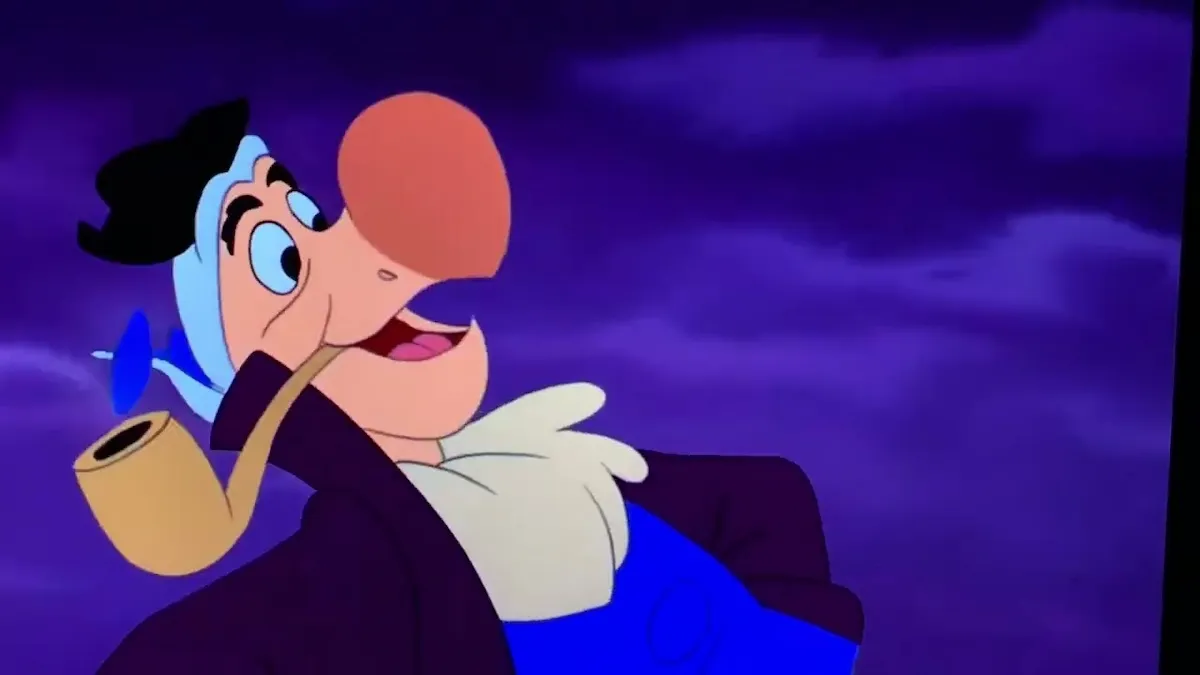
I don’t know what to believe anymore. First Pluto takes the bullet, and now this: The triceratops may have never existed. Two paleontologists are now arguing that the three-horned dinosaur species — perhaps first made iconic with “Cera” (pictured above) in the classic 1988 animated film The Land Before Time — is simply the juvenile form of the “torosaurus,” a dinosaur with differently-angled horns and a longer, thinner, and smoother frill with two holes.

Needless to say, we were speechless.

Update: A tipster with a background in the life sciences tells us that this storyline has been overblown.

“we’ve known for a few weeks that a torocerotops is actually a triceratops 
http://blogs.smithsonianmag.com/dinosaur/2010/07/22/new-study-says-torosaurustriceratops/
this is just confusion”

Since the triceratops was discovered before the torosaurus — in 1887 versus 1889 — scientific naming conventions would have it that if the two are the same species, ‘triceratops’ would be the correct name, not ‘torosaurus.’ So if anything, the torosaurus may not ‘be a real dinosaur,’ though this probably won’t particularly upset anybody’s childhood.

John Scannella and Jack Horner from the Museum of the Rockies in Bozeman, Montana believe that the triceratops may have had immature spongy bone tissue, being in an intermediate stage of “shape-shifting,” a physical process undergone by dinosaurs. According to the claim, as the supposed triceratops aged, its “three facial horns” changed in shape and orientation, and its “short, thick neck-frill with a saw-toothed edge” lengthened, thinned, and smoothed out, eventually becoming fenestrated. “Even in the most mature specimens that we’ve examined, there is evidence that the skull was still undergoing dramatic changes at the time of death,” Scanella told New Scientist.

The only modern animal with a similar function is the dinosaur descendent, cassowary, which develops a large spongy crest after its skull has grown to 80 per cent of its full size.

Some dinosaur fans, however scientifically inclined, are in denial. Dino Ignacio, for example, has set up “Save the Triceratops” pages on Facebook and BuzzFeed, writing:

Scientists are saying that the Triceratops dinosaur—you know and love, was actually a juvenile form of a Torosaurus, the three horned dinosaur you don’t know and don’t love. Heart this buzz or join our Facebook page to help us tell those pesky scientists that they can take Pluto and the Brontosaurus.. but they can’t take our Triceratops!

Of course, the scientific use of “Brontosaurus” had officially been removed by the early 20th century when paleontologist Elmer Riggs pointed out the Brontosaurus excelsus was of the same genus as Apatosaurus ajax. By then, however, the original name had taken hold in the popular consciousness.

So may the triceratops live on in our popular imaginations! It should be noted though that some other Internet users are not as resistant to the news. One “chrispgriffin” tweets: “Whatever, Cera was a dick in Land Before Time anyway.”

(via New Scientist)
Filed Under |
  • http://laurele.livejournal.com laurele

    Pluto didn’t “take a bullet,” as it IS still a planet. Please do not blindly accept the controversial demotion of Pluto, which was done by only four percent of the International Astronomical Union, most of whom are not planetary scientists. Their decision was immediately opposed in a formal petition by hundreds of professional astronomers led by Dr. Alan Stern, Principal Investigator of NASA’s New Horizons mission to Pluto. Stern and like-minded scientists favor a broader planet definition that includes any non-self-luminous spheroidal body in orbit around a star. The spherical part is important because objects become spherical when they attain a state known as hydrostatic equilibrium, meaning they are large enough for their own gravity to pull them into a round shape. This is a characteristic of planets and not of shapeless asteroids and Kuiper Belt Objects. Pluto meets this criterion and is therefore a planet. Using this broader definition gives our solar system 13 planets and counting: Mercury, Venus, Earth, Mars, Ceres, Jupiter, Saturn, Uranus, Neptune, Pluto, Haumea, Makemake, and Eris. At the very least, you should note that there is an ongoing debate rather than portraying one side as fact when it is only one interpretation of fact.

  • http://www.geekosystem.com/ Michael Suen

    @laurele: My apologies, I should have clarified. I’m aware that there’s a good number of leading scientists who are in contention with Pluto’s demotion; in fact, I linked to a National Geographic piece which acknowledges as much. My passing comment about Pluto was not intended to be any sort of factual assertion. If anything, it was more a jibe at these semantic debates. Distant planets or long-extinct dinosaurs are such staples of our popular consciousness, and as I mentioned re: Brontosaurus, scientific naming conventions have thrown their assumed “facts” into confusion.

  • Emma the awesome

    nuh uh dwarf planet xoxo gossip girl

  • Wentbrown

    I personally find the idea of triceratops being a juvenile Torosaurus to be quite frankly preposterous, because there are a number of differences between the two to warrant a seperate classification

  • SMOKE

    i agree with @def9f2300bb29ef9661a743e50729f50:disqus 

  • yamarati

    Yes, because that is the same logic as an Asian elephant being a baby African elephant. Perhaps there were several different types of triceratops just as there are several types of bears, owls, or even sharks. Someday someone might say a panda is actually the baby version of a polar bear. As for the rest of the information that we were all “told as kids”, maybe we should collect enough data before making something official, or not change the way we define things. Why was Pluto being investigated as a planet or stray moon, anyway? Did we get bored looking at the stars and just run out of things to do? Our bright minds need to focus on more important things like terraforming nearby planets and moons to expand civilization into space. No. Scratch that. Let’s stay on Earth and fight over petty crap.

  • Asshole

    You are wrong.

  • Jim Lahey

    Wentbrown and SMOKE, do either of you have even one shred of scientific credibility to back your statements up? Seeing ‘The Land Before Time’ does NOT count as science. Unless you’re a paleontoligist, please don’t try and talk like you’re one.

  • Dinosaur

    Wentbrown isn’t a scientist, and if you read carefully, you would have seen that many changes occur in the young triceratops before it looks like a torosaurus.

  • Daemonstryke

    spike and ducky ftw

  • ArcticFox789

    Pluto is officially classified as a dwarf planet, not a planet.

  • HarrytheFish

    Absolutely preposterous!

  • http://www.facebook.com/jessica.tashman Jessica Tashman

    Maybe you should be a paleontologist who studies ontogeny in ceratopsians before reaching such a “frankly preposterous” conclusion. This happens all the time in paleontological history. It’s very difficult to know grown patterns in extinct species that are so very different from extant ones. Also, seeing as both Torosaurus and Triceratops were both discovered during the 1880s, paleontology was a fairly new science at that point, and many new specimens were being excavated all the time. Ontological differences are common and confusing, and were, especially during that time when we didn’t have the necessary equipment to study growth at the extent that Jack Horner can today. There are a number of differences between the facial bone structures of African children and Hispanic adults, but they are both Homo sapiens…there is no difference in this case.